
Buying a business can be an exciting opportunity — but also a risky one if you’re not asking the right questions. At ORNA, we work with investors who want more than surface-level due diligence. We help them uncover the real story behind the numbers.
Here’s a quick 5-point self-check to help you assess whether a business is truly worth buying — based on what we see in real deals every day.
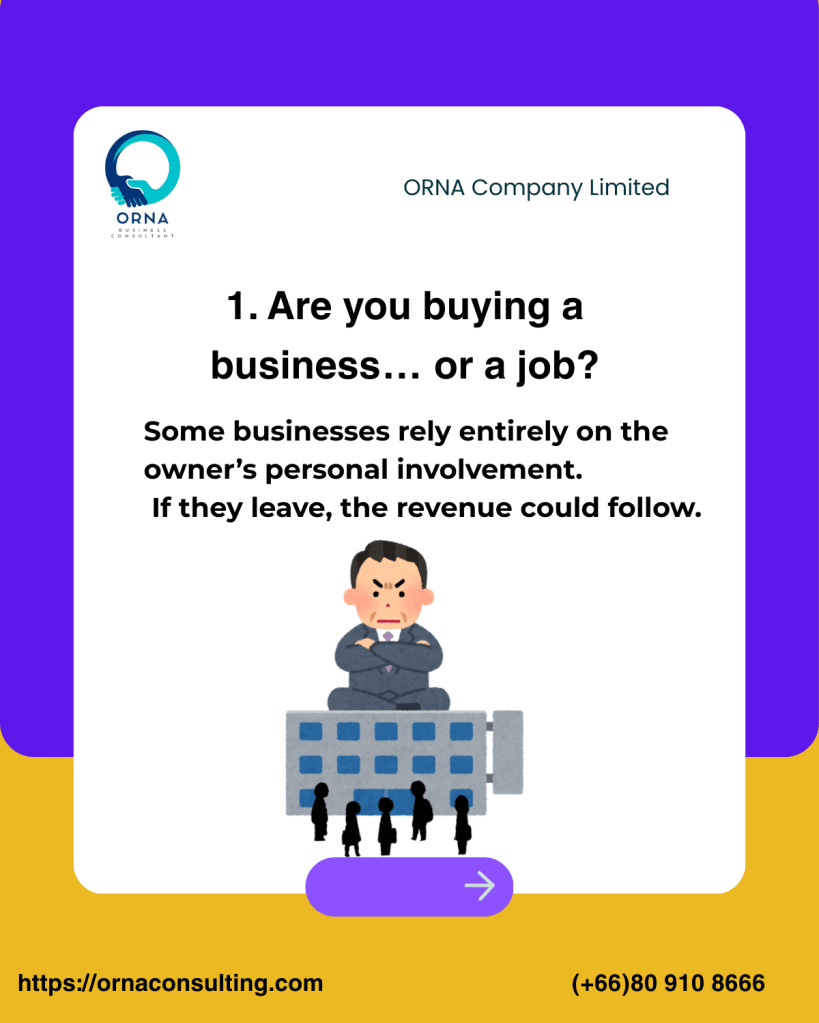
1. Are You Buying a Business… or a Job?
Many small businesses depend heavily on the founder’s personal involvement. They handle sales, supplier relationships, even customer service. If they walk away, the revenue might too.
✅ Look for businesses with:
– Documented processes and systems
– Clear team roles and delegation
– Repeatable income that doesn’t rely on one person
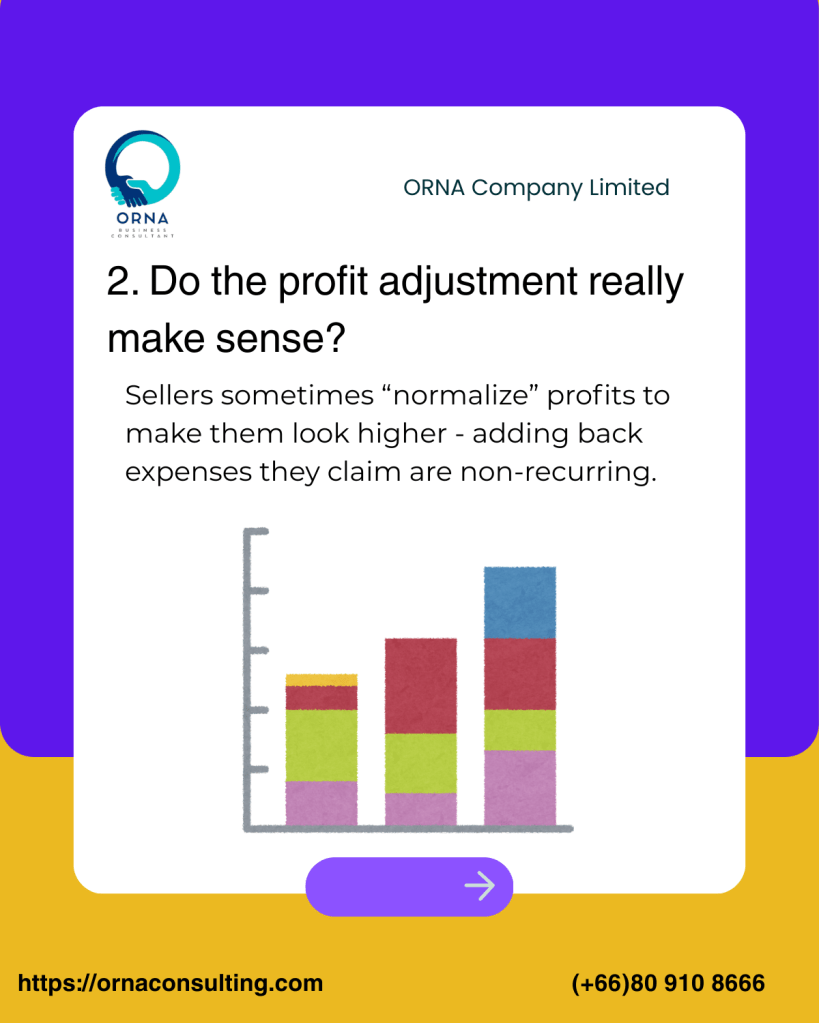
2. Do the EBITDA Adjustments Make Sense?
It’s common for sellers to present “adjusted EBITDA” — adding back expenses they claim are non-recurring or unrelated. But not all adjustments are fair.
🧐 Scrutinize these common items:
– Marketing or R&D labeled as “one-time”
– Below-market or above-market owner salaries
– Related-party transactions like rent or services
– “Non-recurring” costs that… actually recur
Small changes to EBITDA can make a big difference to valuation — don’t just accept what’s in the pitch deck.
3. Profits ≠ Cash.
A business might be profitable on paper but still require a lot of ongoing cash to operate. This often surprises buyers post-acquisition.
⚠️ Common cash-drainers:
– Large inventories that need constant replenishment
– Customers who pay late (long receivable cycles)
– Supplier prepayments or deposits
Understanding working capital helps you avoid liquidity issues even when profits look strong.
4. What’s the Customer Concentration Risk?
If 30% or more of revenue comes from one or two customers, that’s a red flag. Even a profitable business can become unstable if a key client walks away.
📊 Before buying, ask:
– How diverse is the customer base?
– What’s the churn rate?
– Are there long-term contracts in place?
High concentration adds risk — and should affect your valuation.
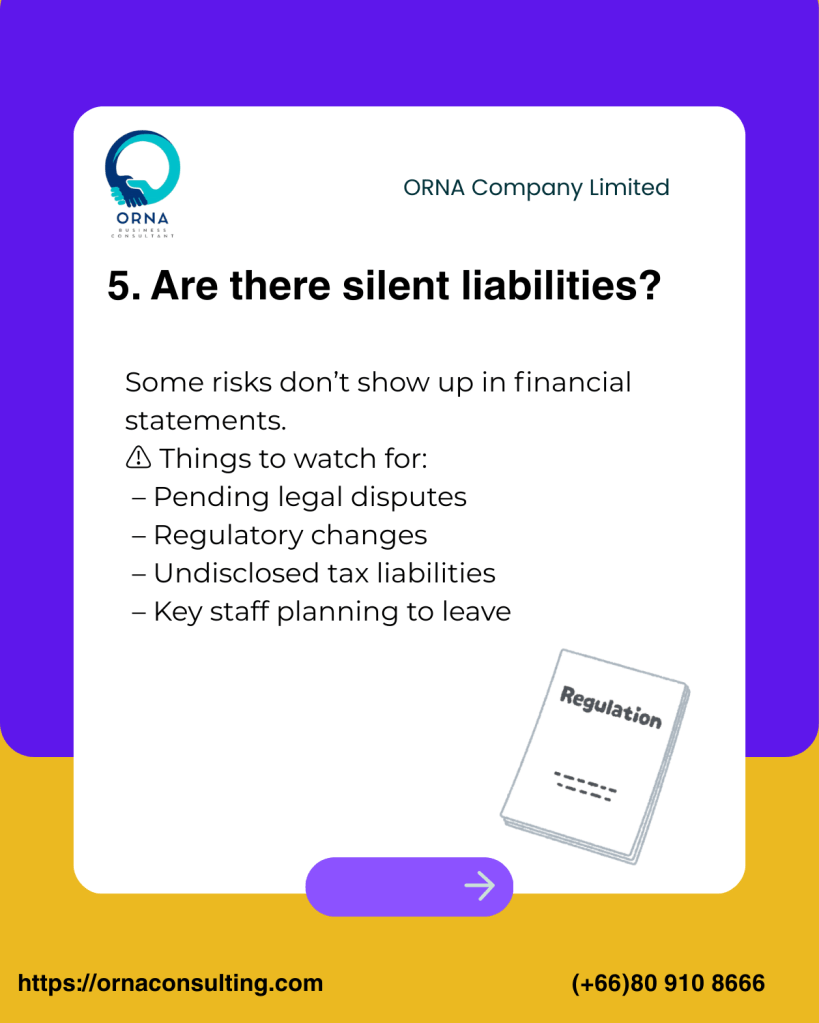
5. Are There Any “Silent Liabilities”?
Not all risks show up on the balance sheet. Some of the most important issues are hidden from financial reports entirely.
🔍 Things to watch for:
– Pending legal disputes or tax issues
– Regulatory or licensing changes
– Informal staff agreements (e.g., under-the-table arrangements)
– Key employees who may leave post-sale
These “off-sheet” risks can impact business continuity or lead to unexpected costs down the line.
📝 Final Thoughts
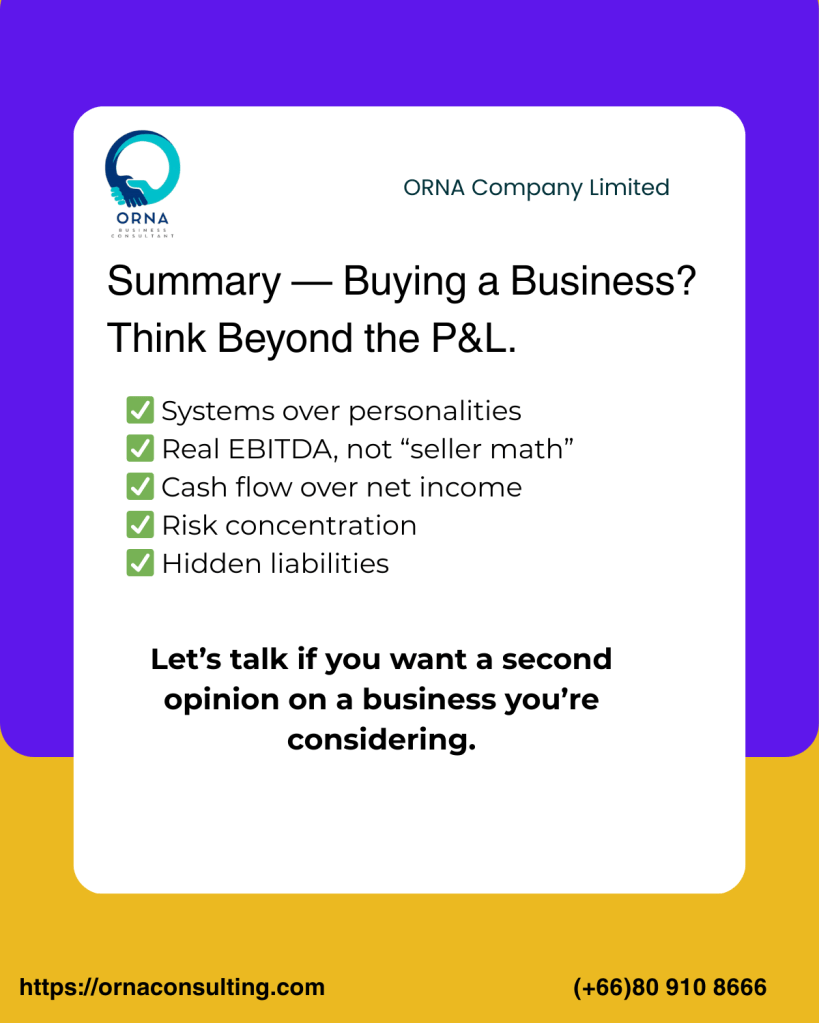
Buying a business is never just about the numbers. It’s about what’s behind the numbers.
This self-check won’t replace full due diligence, but it’s a great way to avoid common blind spots — and make smarter decisions from day one.
If you’re considering a business purchase and want an independent, professional opinion on value and risk, ORNA can help.
📩 Reach out to us — we’d love to walk through the deal with you.

 ORNA Company Limited
Leave a comment