
A client recently asked me this, and it’s actually a great question. A listed company usually has a dividend payout policy stated for investors to know what to expect – some pay as high as 60% while some pay very small %.
Here are the main factors that influence how much a company decides to pay out:
✅ Profit stability – Companies with steady, predictable earnings feel safer paying higher dividends. If profits swing a lot, they’ll hold back cash as a buffer.
✅ Cash flow & debt – Even if profit looks good on paper, companies with high debt or tight cash flow often keep more money inside the business.
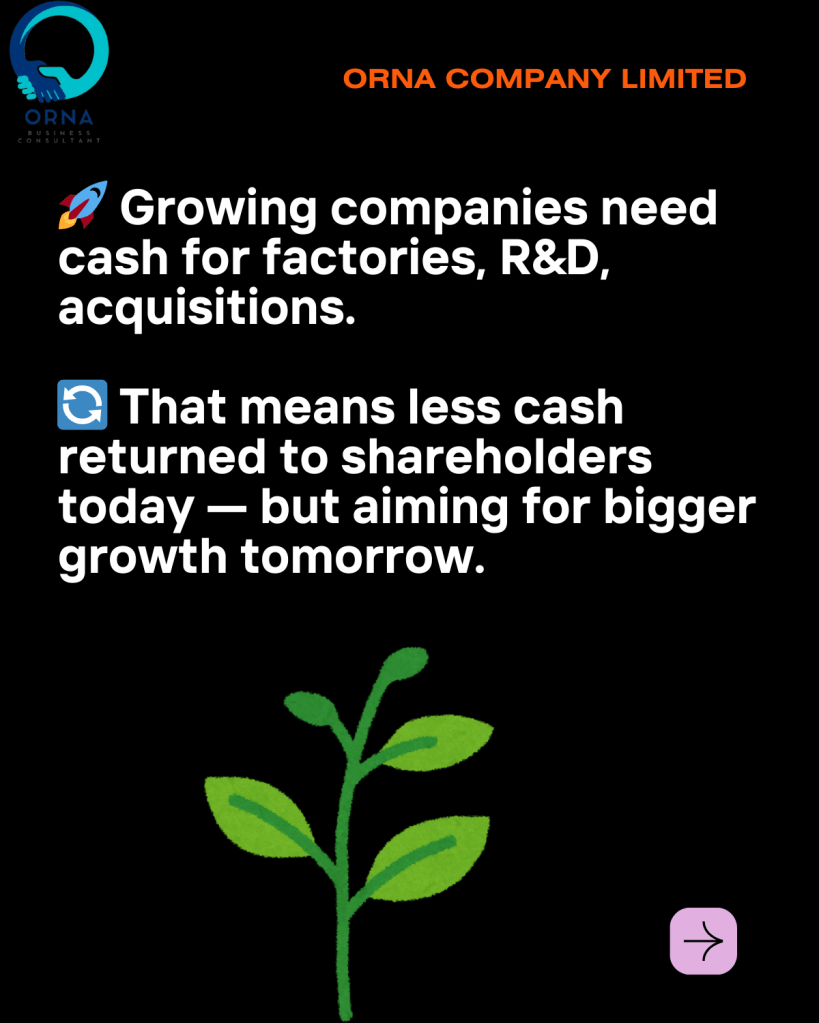
✅ Expansion & investment – Growing businesses need capital for new factories, technology, or acquisitions. That often means lower dividends now in exchange for future growth.
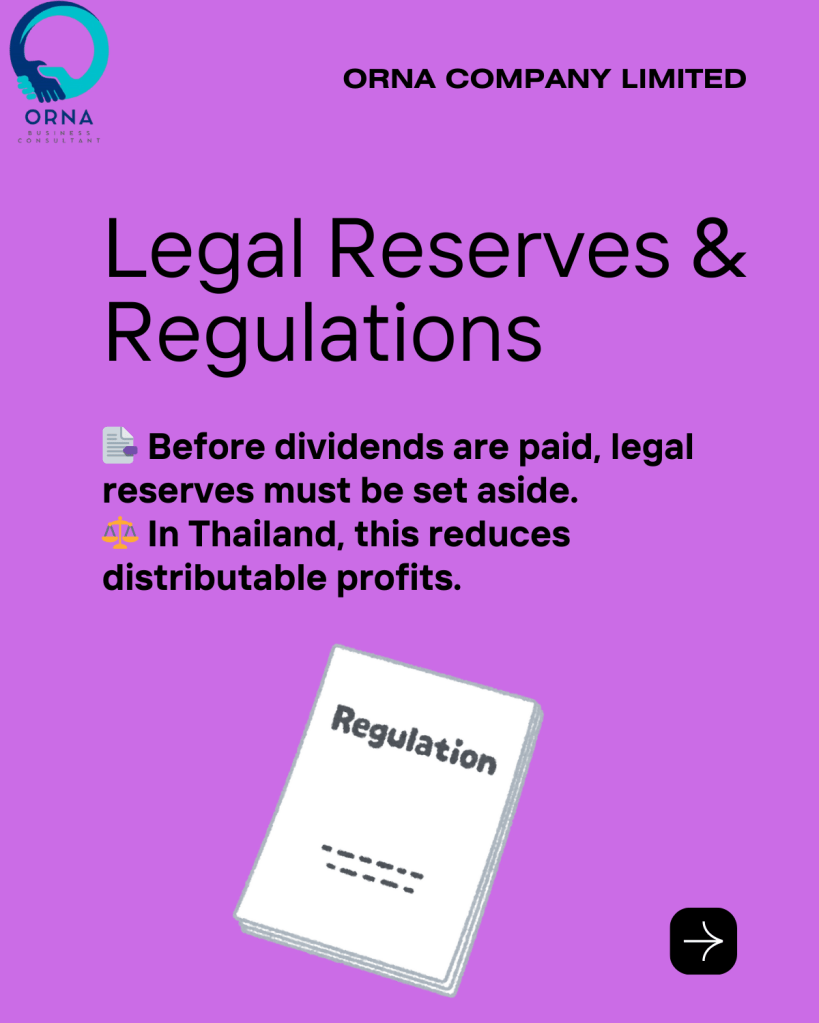
✅ Legal reserves & regulations – In Thailand, for example, a company must set aside a legal reserve before distributing dividends. That cuts into what’s left for shareholders.
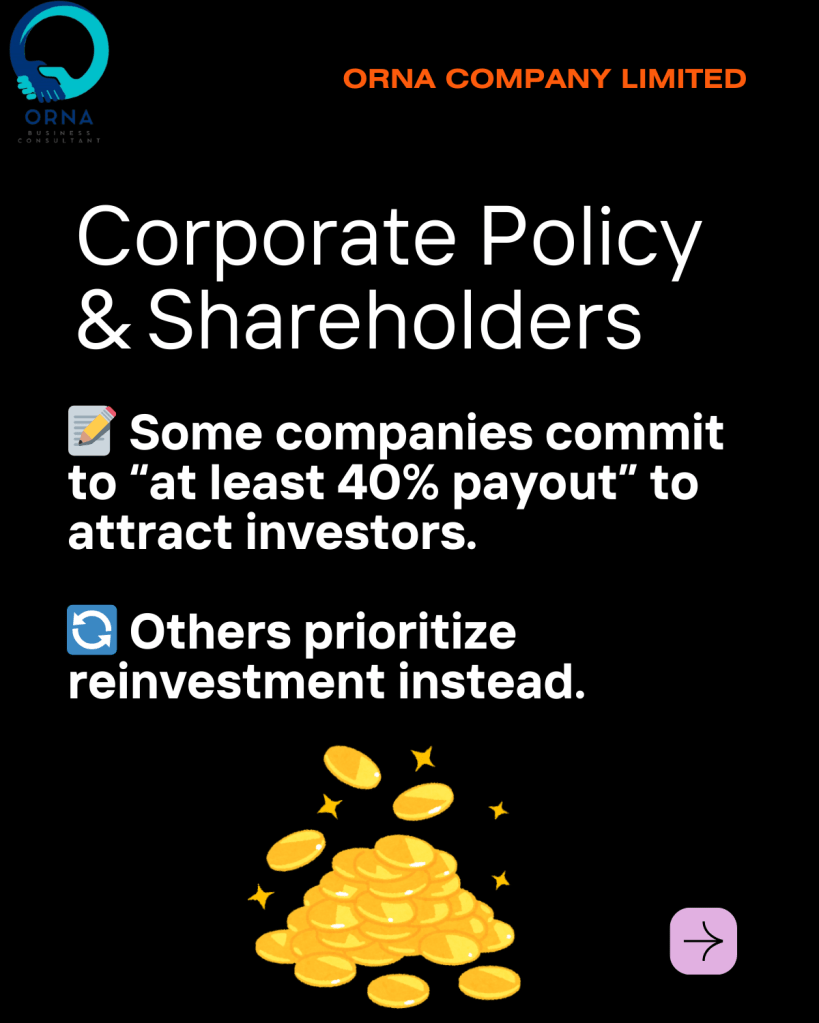
✅ Corporate policy & shareholder expectations – Some firms want to attract income-focused investors, so they commit to policies like “not less than 40% of net profit.” Others prioritize reinvestment.
So companies in different stages have different strategies and investors can choose the nature of companies that suit their own investment goal.
#ORNA #BusinessValuation #Consult


 ORNA Company Limited
Leave a comment