
When doing a valuation, we often see a terminal value added at the end of the DCF model.
But not every company has one. Why?
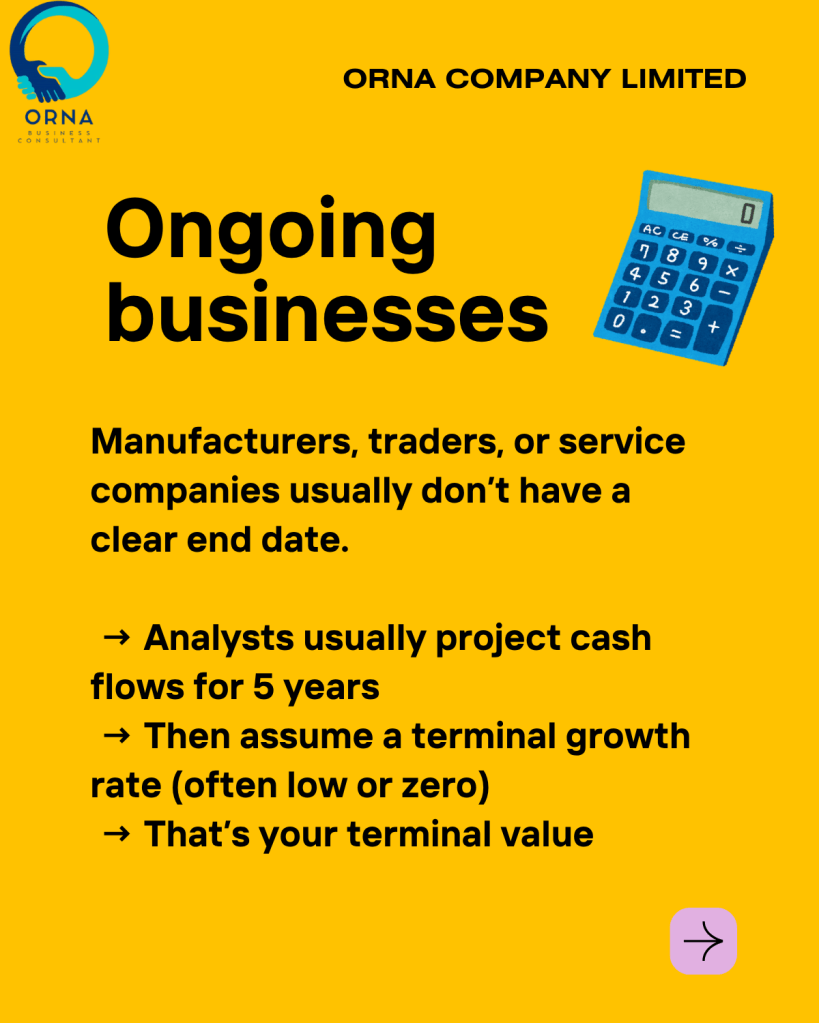
For companies that can be assumed to continue operating indefinitely — like manufacturers, trading firms, or service businesses — analysts usually project cash flows for 5 years, then assume a terminal growth rate (sometimes even zero to be conservative).
That terminal value represents all future cash flows beyond the explicit forecast period.
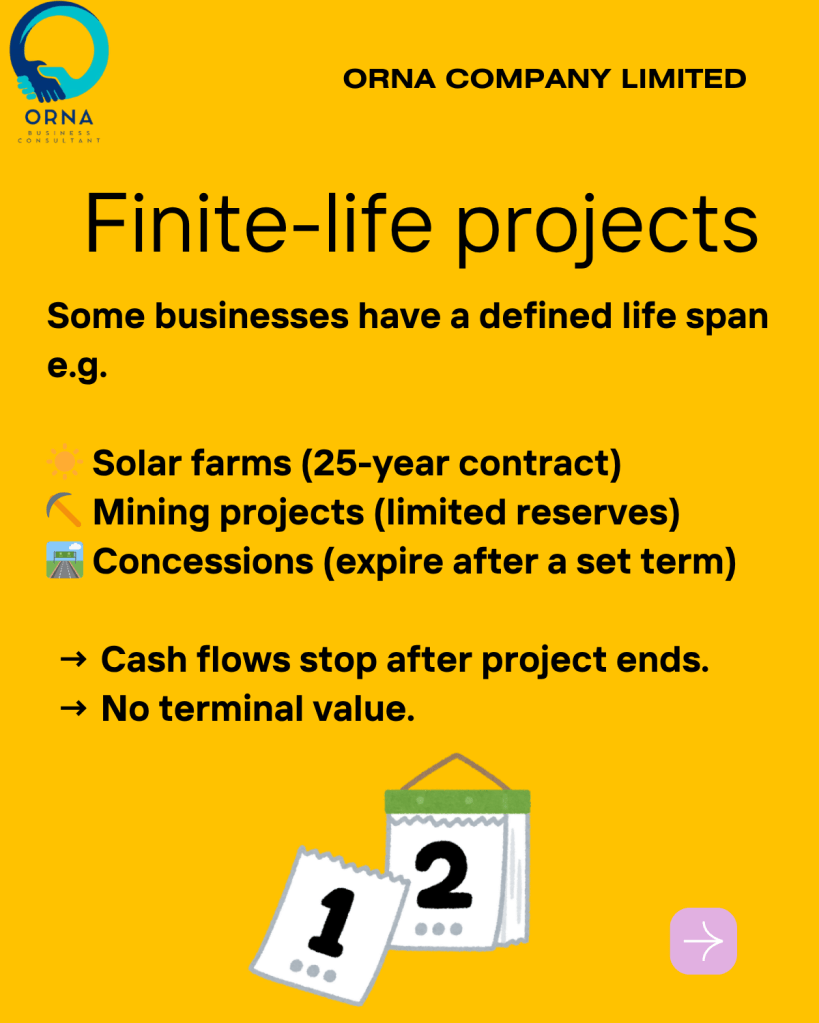
But for companies with a finite project life, like:
- a solar farm with a 25-year contract,
- a mine that runs out of reserves, or
- a concession that expires,
the analyst will project cash flows only until the end of the project life.
After that, there’s simply no more cash flow — and therefore, no terminal value.
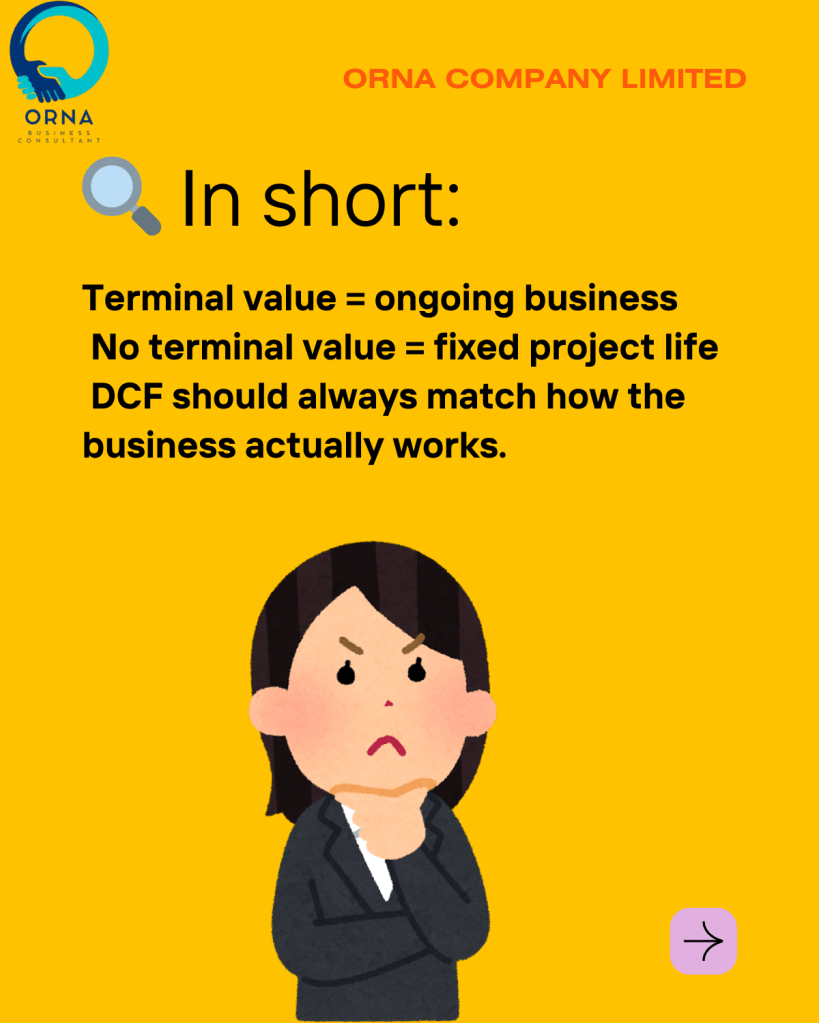
In short:
🔹 Terminal value = for ongoing businesses
🔹 No terminal value = for projects with a clear end date
👉 At ORNA, we don’t just calculate value — we interpret it.
If you’re investing in or selling a business, we’ll help you understand what’s behind the numbers.
📩 Message us to learn how our valuation reports can give you clarity before your next investment.
#ORNA #Investment #DCF #TerminalValue


 ORNA Company Limited
Leave a comment